


Ask about your trading, not about trading.
TradeAssay AI reads your journal before it says a word. It finds the hours that pay, the habits that cost and the rules that would have helped, answers with your own numbers — and changes nothing until you confirm.
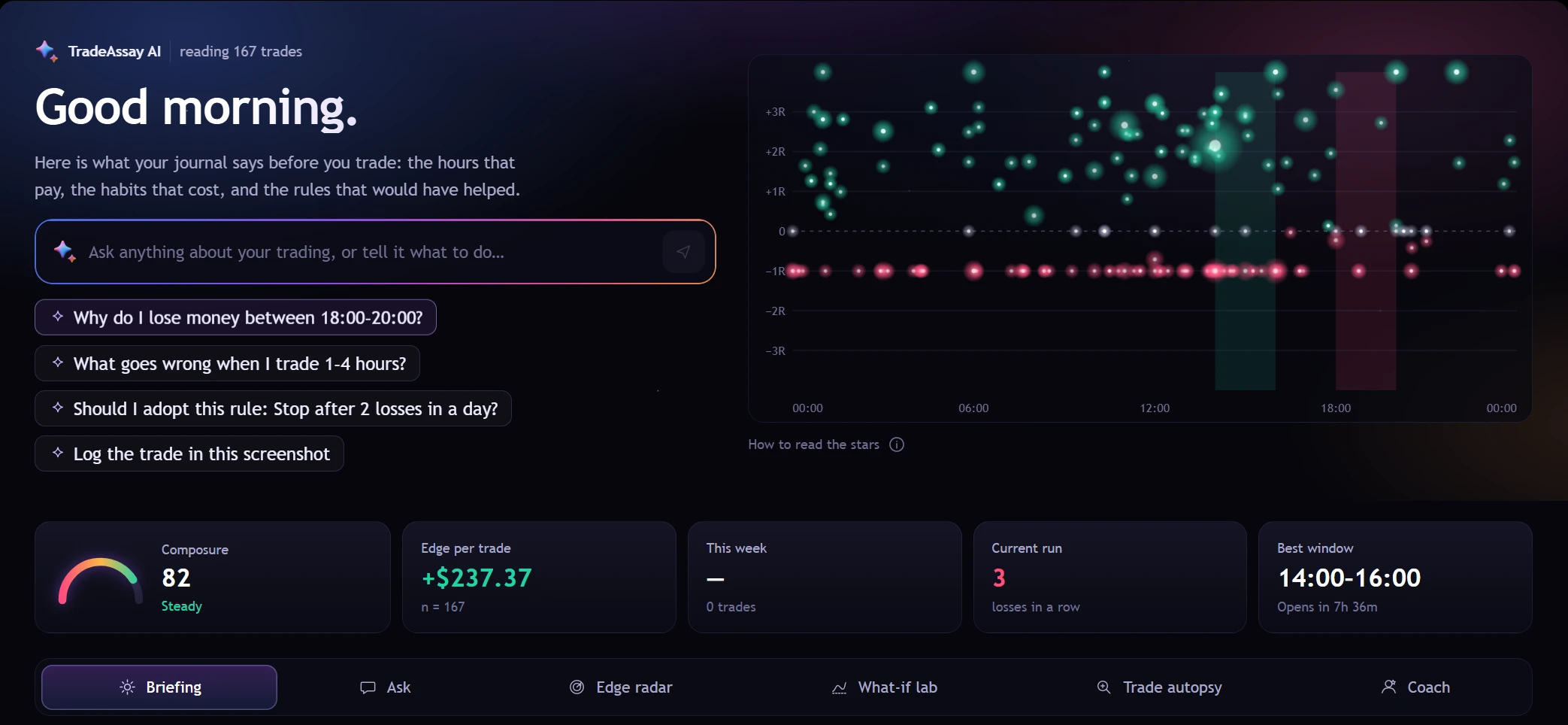
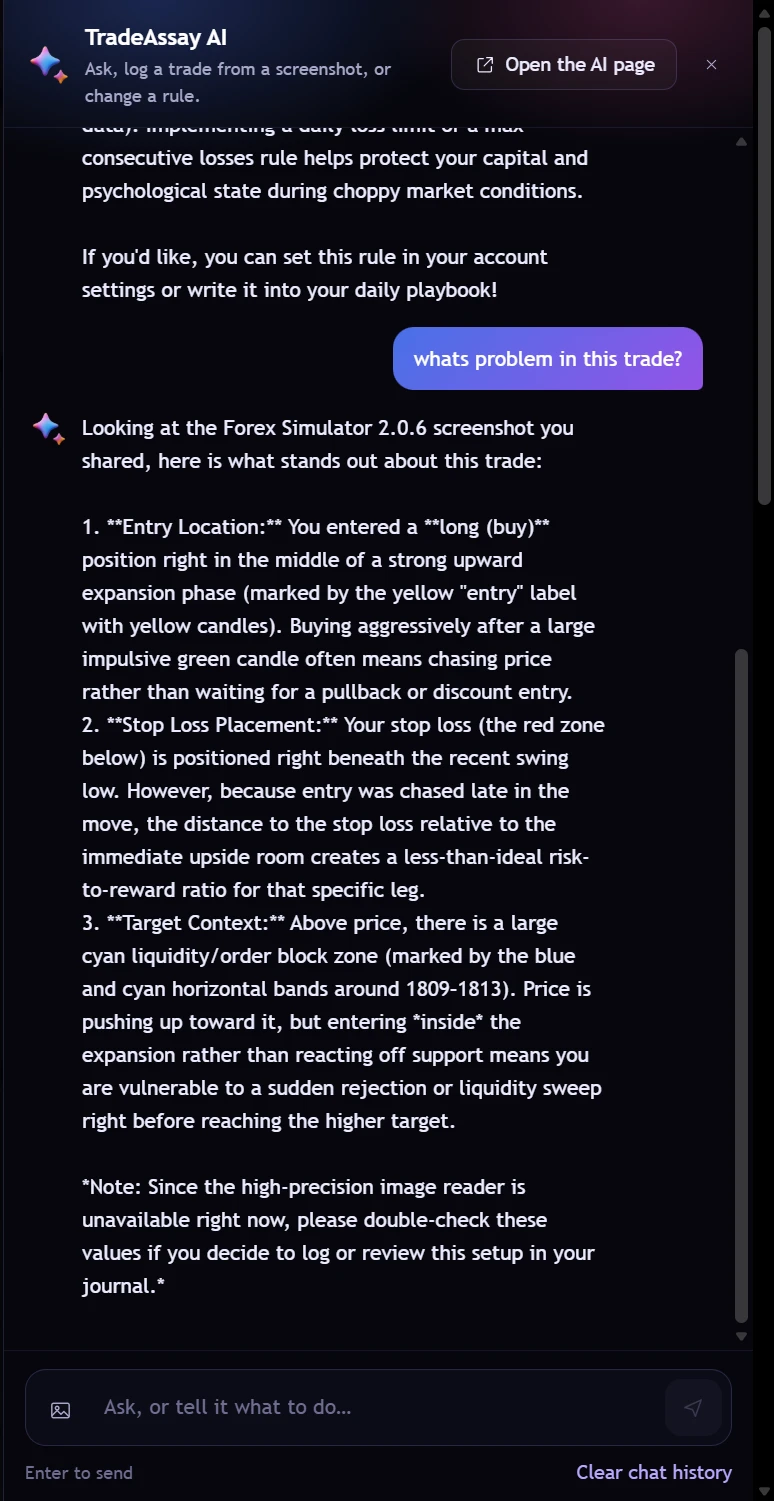
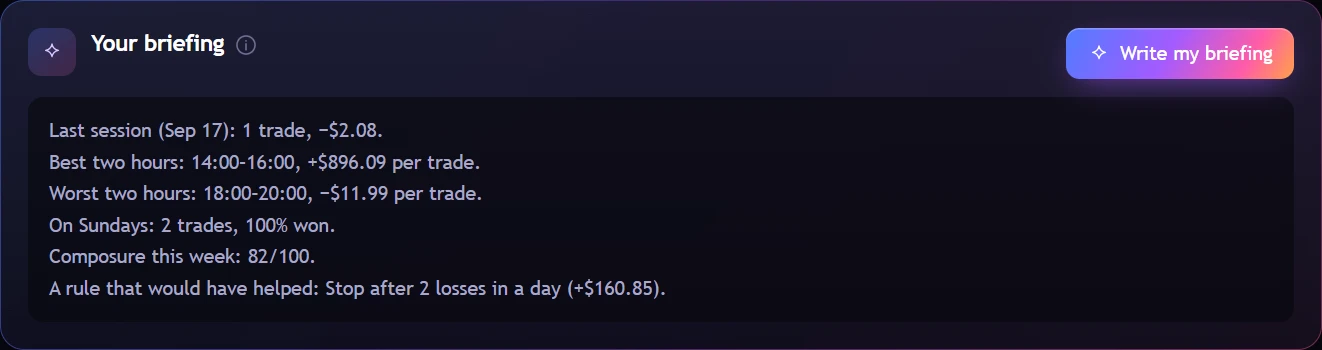
Every figure is worked out by the app from your trades. The AI only puts them into words, so it has nothing to invent.
A pattern needs enough trades on both sides before it is called an edge or a leak. Too few, and it says so.
Anything that would change your journal is shown to you as a card first. Nothing is written until you press confirm.
Where your money comes from, and where it leaks.
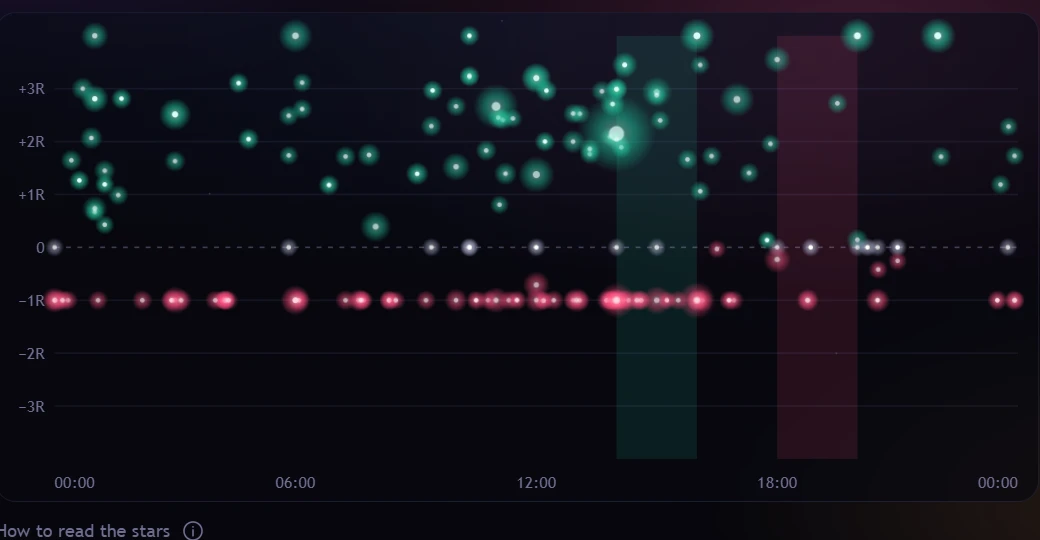
Every slice of your journal — an emotion, a setup, an hour, a symbol — is set against the rest of your trades. The ones that pay more than noise would explain are edges; the ones that cost more are leaks.
- Across: win rate. Up: money per trade. Size: how many trades.
- Click any slice and ask what those trades have in common.

Try a rule on your history before you adopt it.
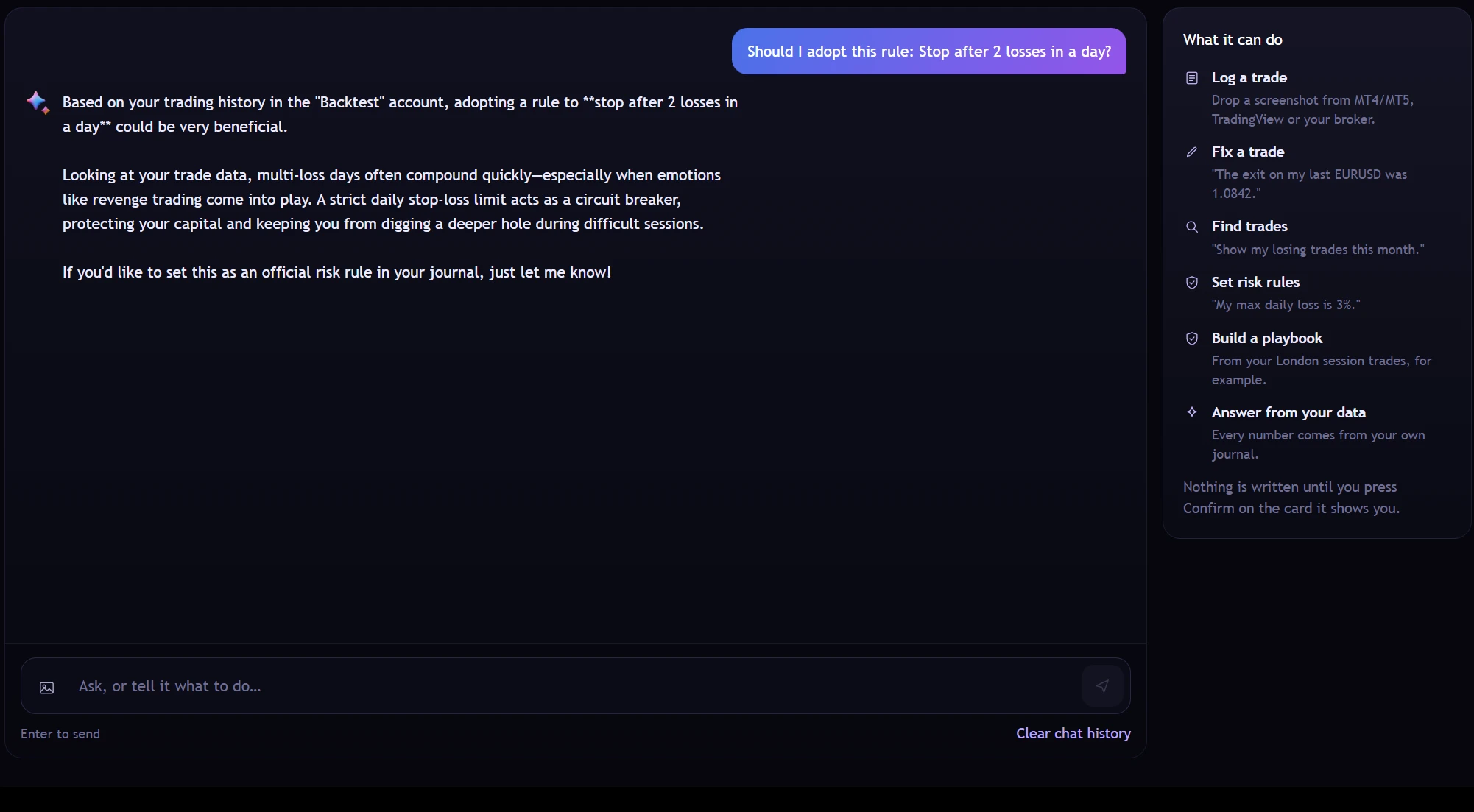
Stop for the day after two losses. No more than three trades. Wait an hour after a loss. Leave out Fridays, or one symbol, or a setup. Your own trades are replayed under the rule, and the curve redraws.
- It suggests the rules that would have paid, each keeping at least half your trades.
- One click writes the rule into your playbook.
Take one trade apart.
Pick a loss and see what about it was unusual for you — the size, the hour, the setup — and how you've done on trades like it before. Then open it on the chart, or ask the AI to read the chart itself.
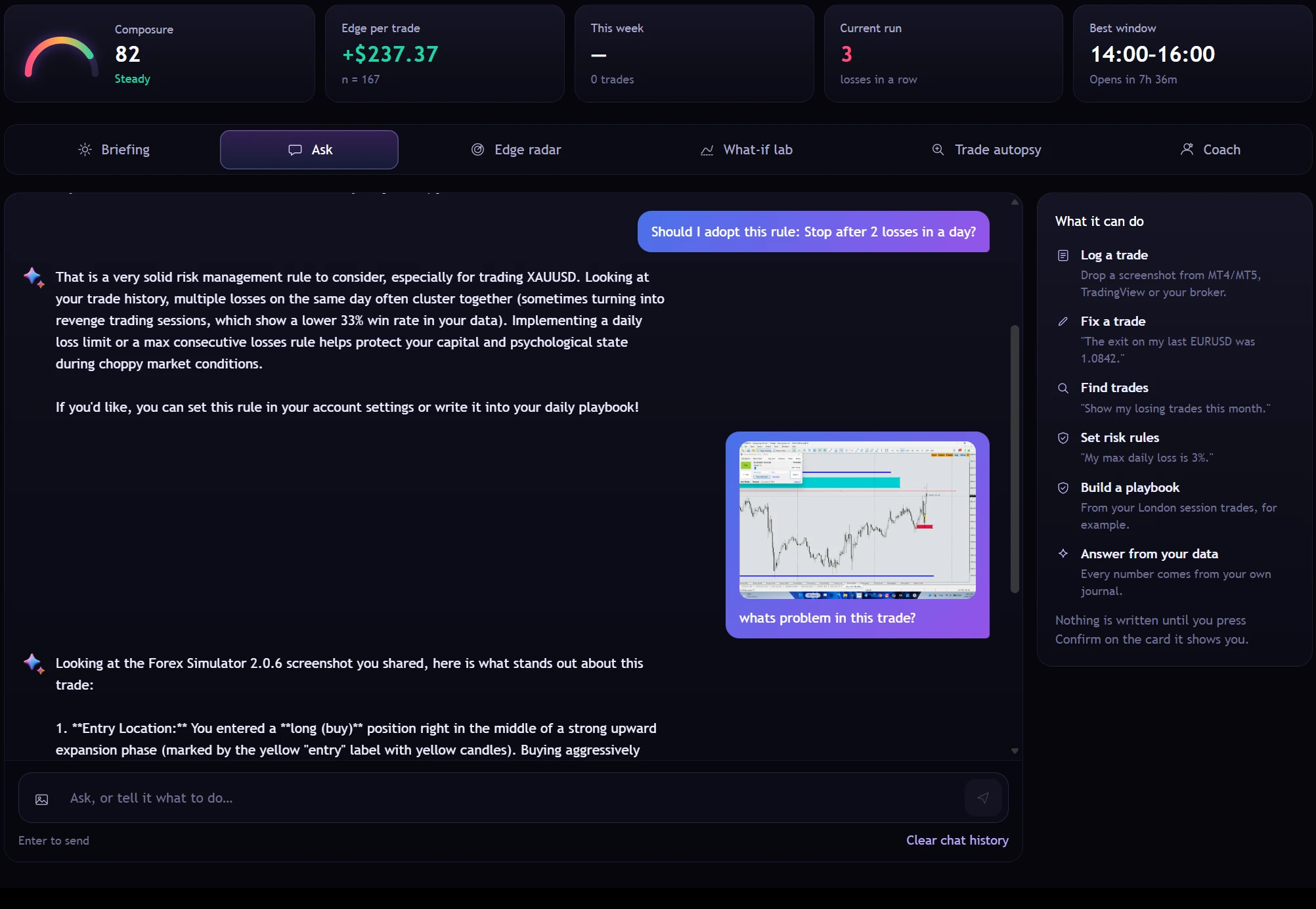
Tell it what to do. It shows you, then does it.
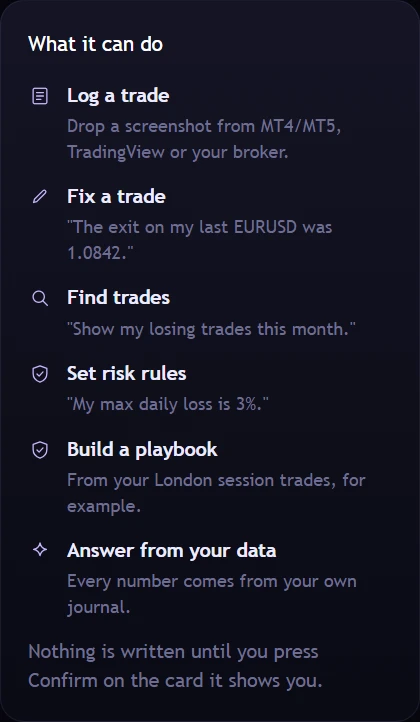
Log the trade in this screenshot. Fix the exit price on my last trade. Build a playbook from my London trades. My max daily loss is 3%. Show me my worst trade. In plain English or Persian.
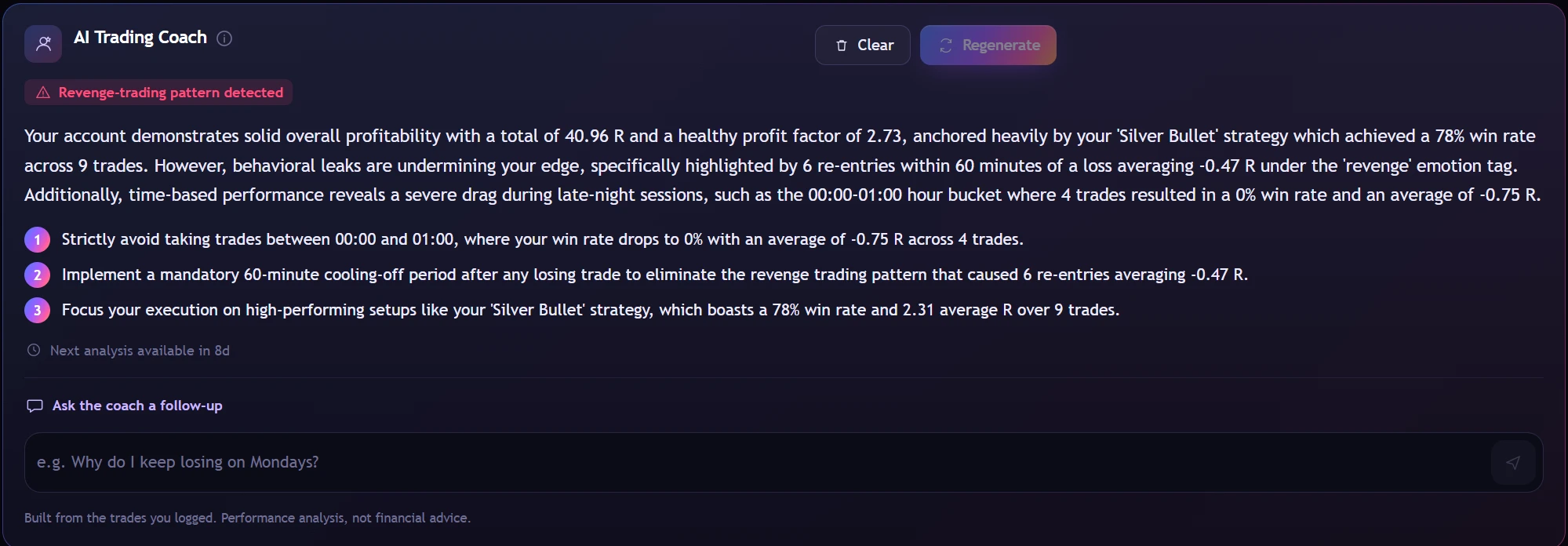
A coach that has read every trade you logged.
About the AI.
Does it make up numbers?
The numbers are computed by the app from your own trades; the AI is given those facts and asked to phrase them. When there isn't enough data, it says there isn't.
Can it change my journal without asking?
No. Anything that writes — a new trade, an edit, a playbook, a rule — appears as a card for you to check. Nothing is saved until you confirm it.
Is it financial advice?
No. It analyses how you have traded; it doesn't tell you what to buy or sell, and past results don't predict future ones.
Where the trades go next.
Your next trade deserves a reason.
Bring in your history and see what it says — free, in a few minutes.
Create your free accountAnswers to what traders ask us most — and a ticket to a person when they aren't enough.
Open helpsupport@tradeassay.com — read by the people who build the app.
Send an emailLong reads on sample size, R and prop-firm rules, each with a calculator.
Start reading